From Manhattan’s glass towers to Blade Runner: a Living Design inquiry into architecture, atmosphere, and what makes a place feel human.
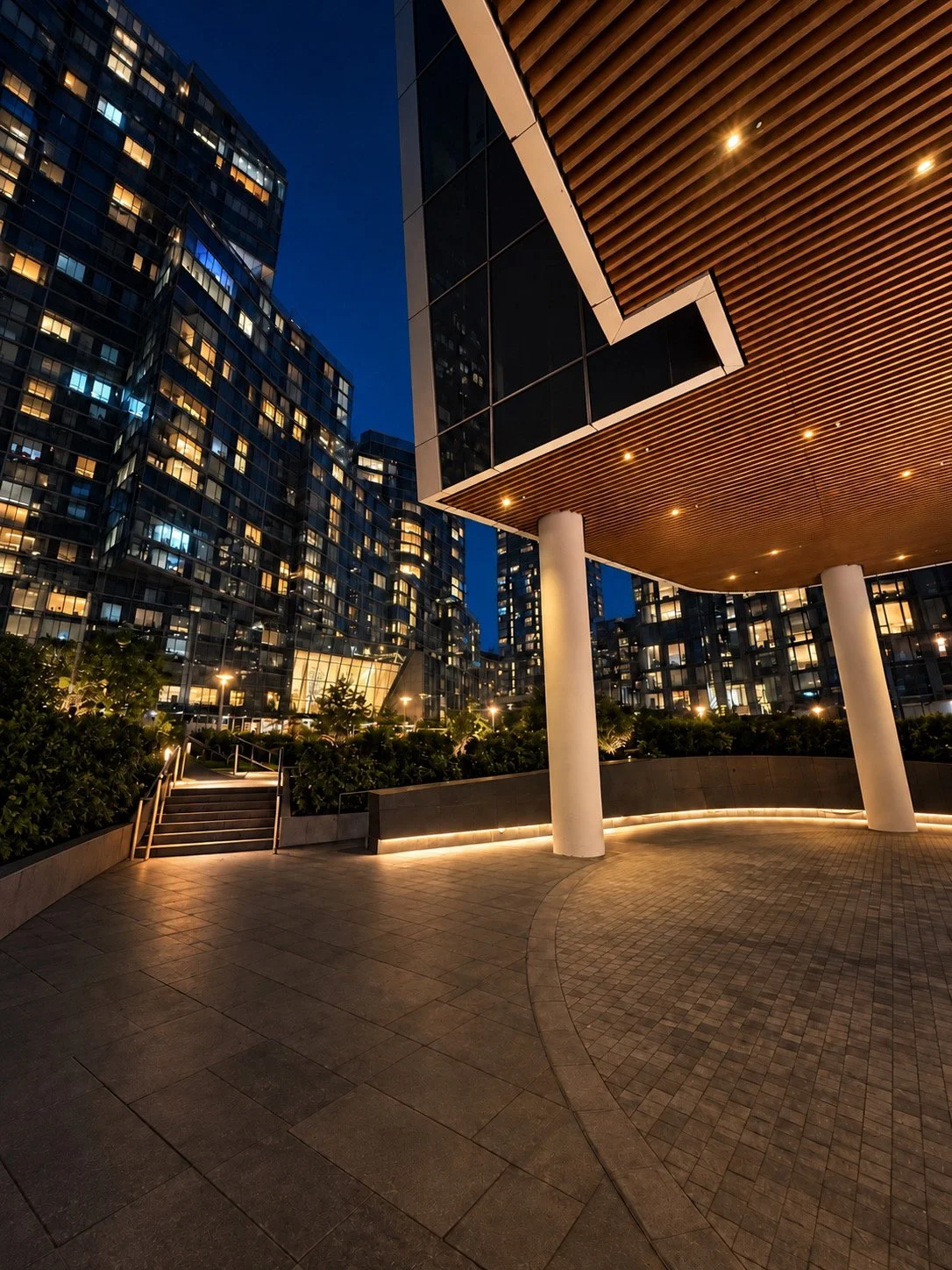
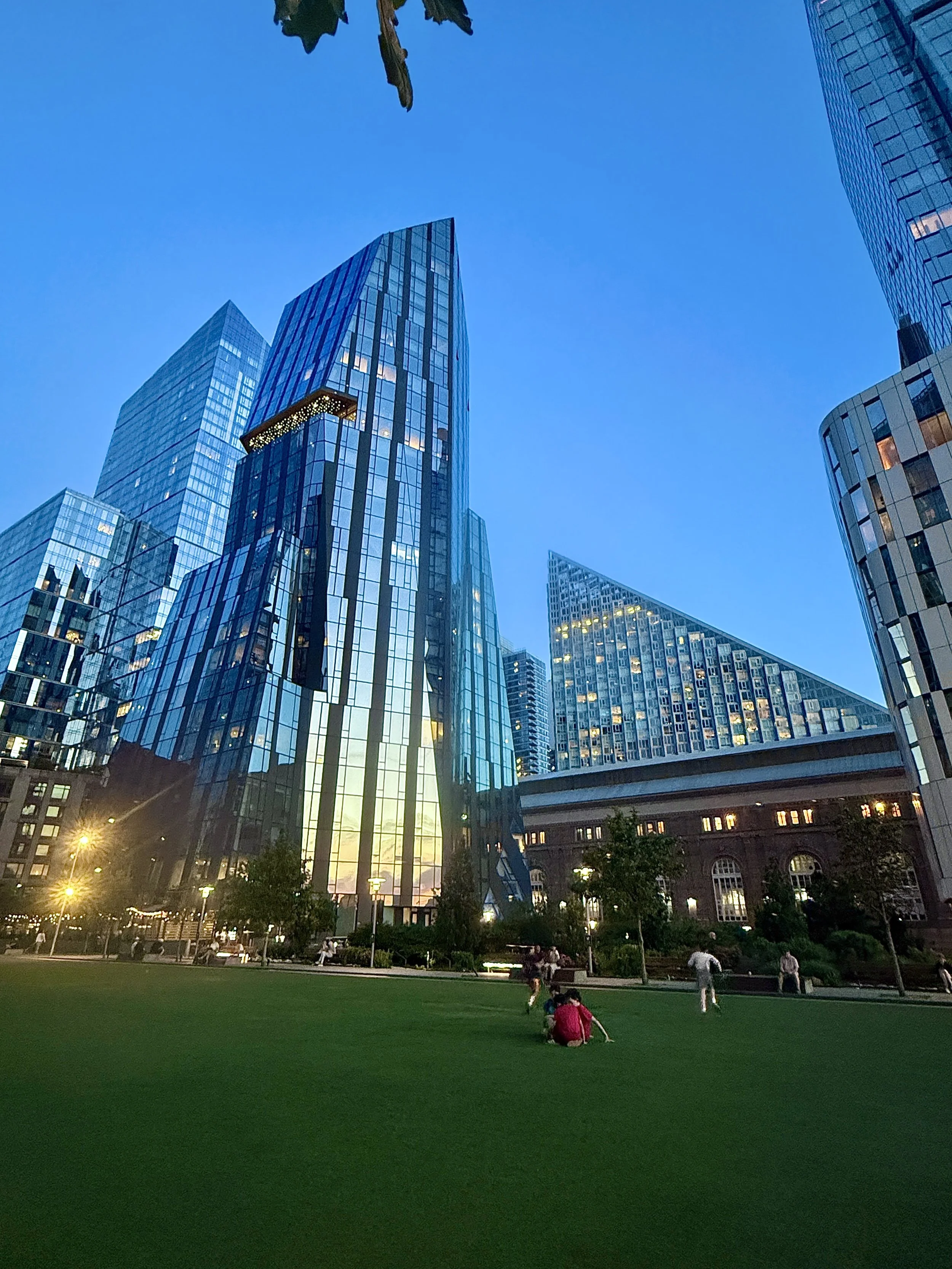
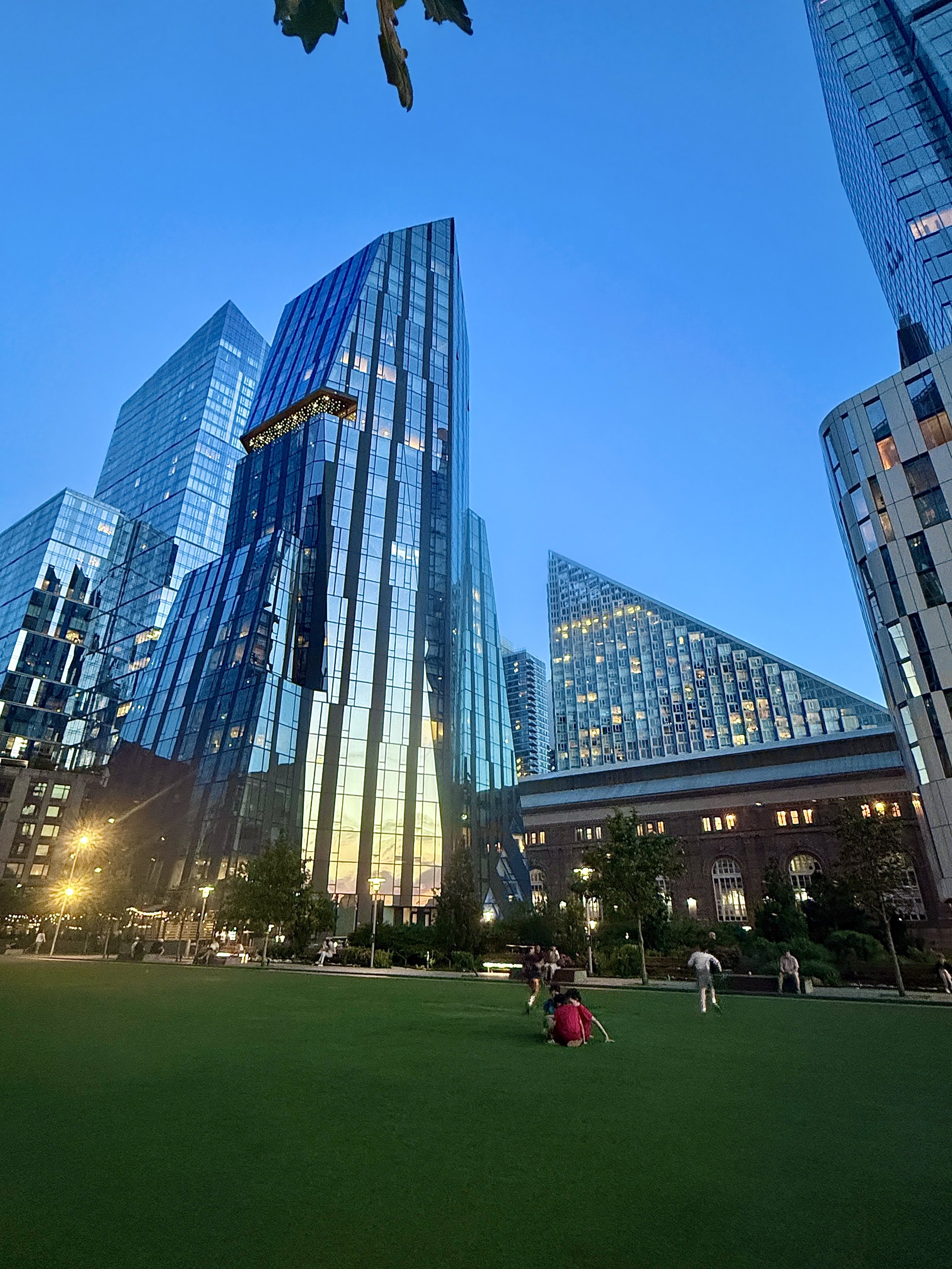
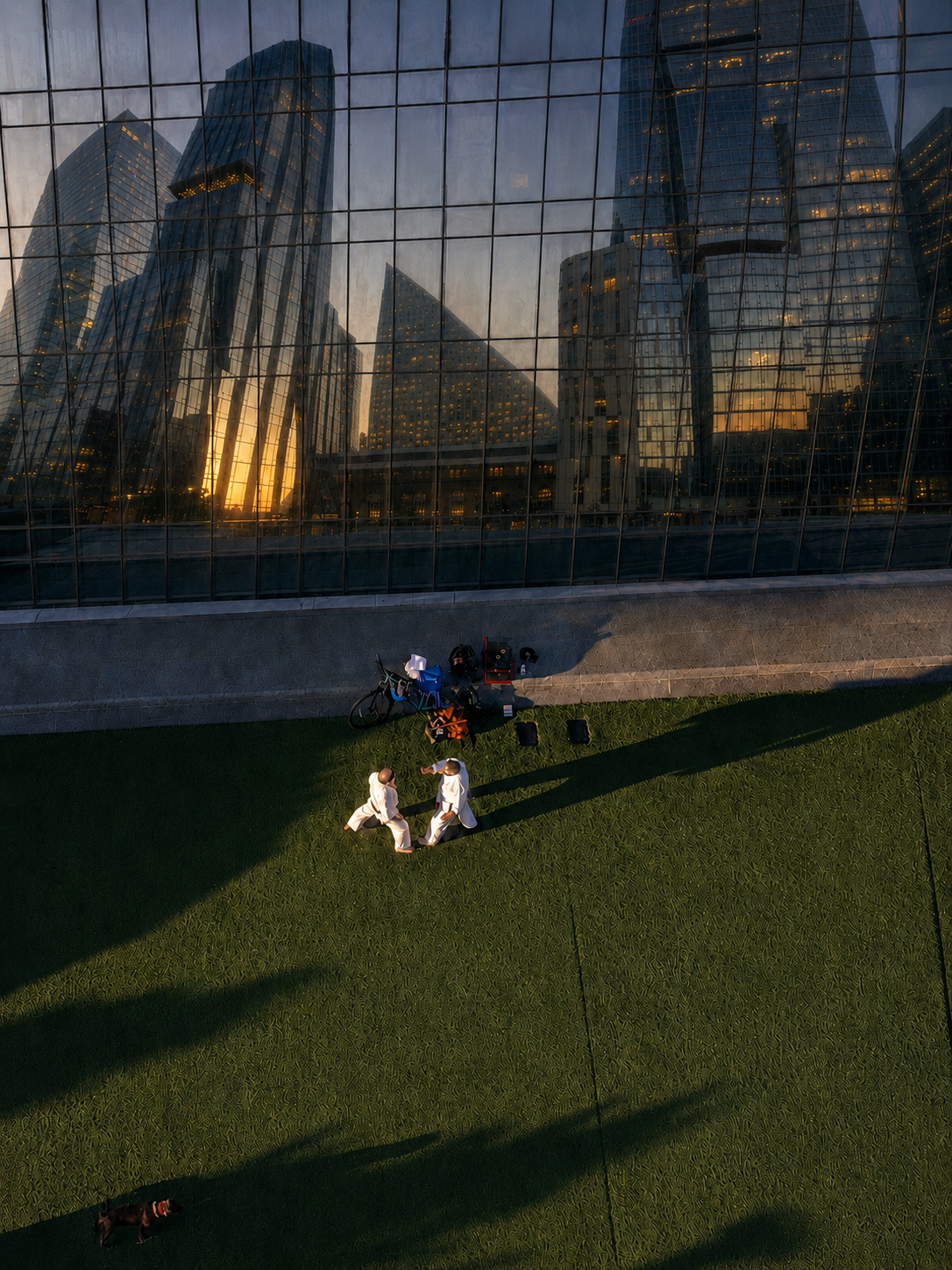
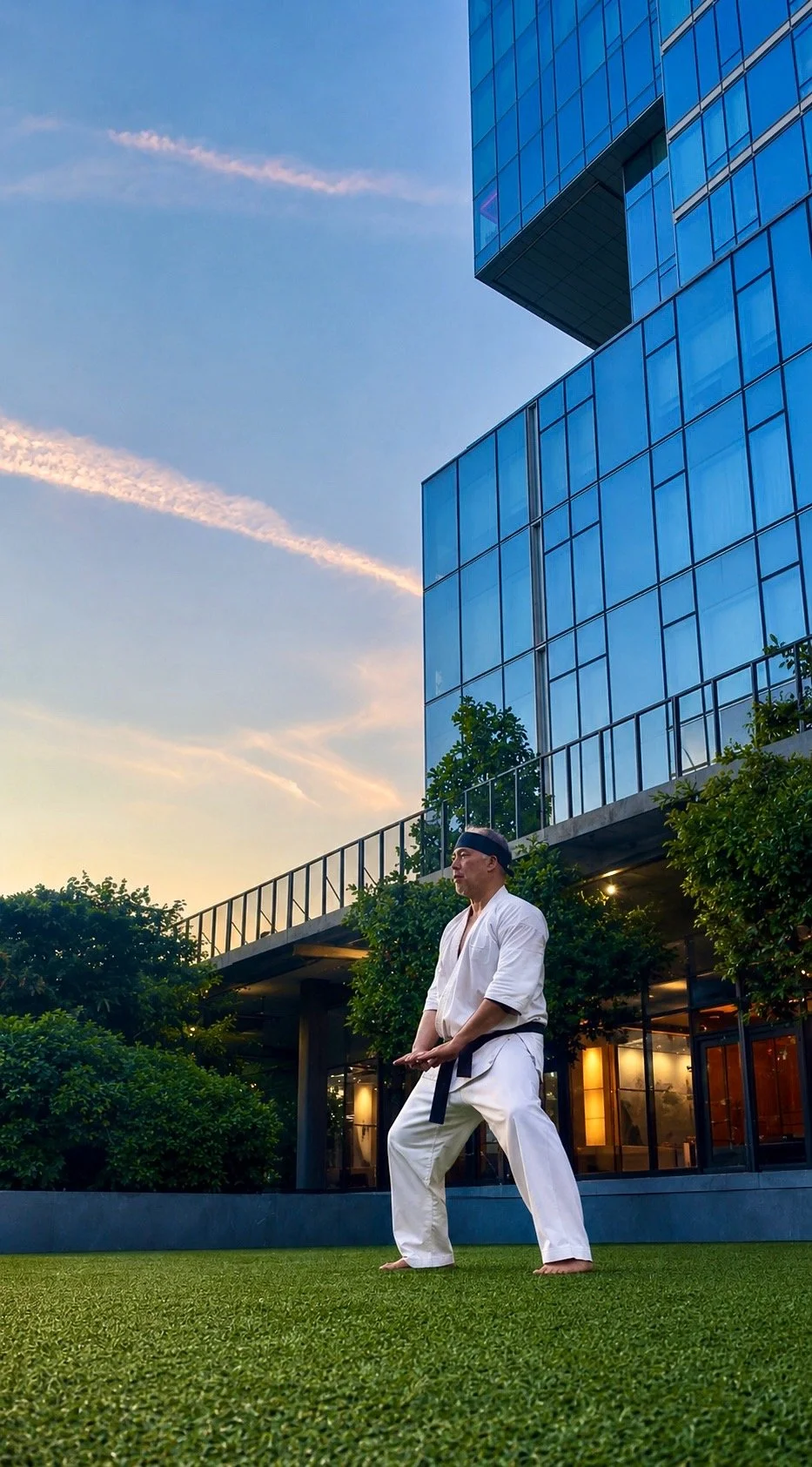
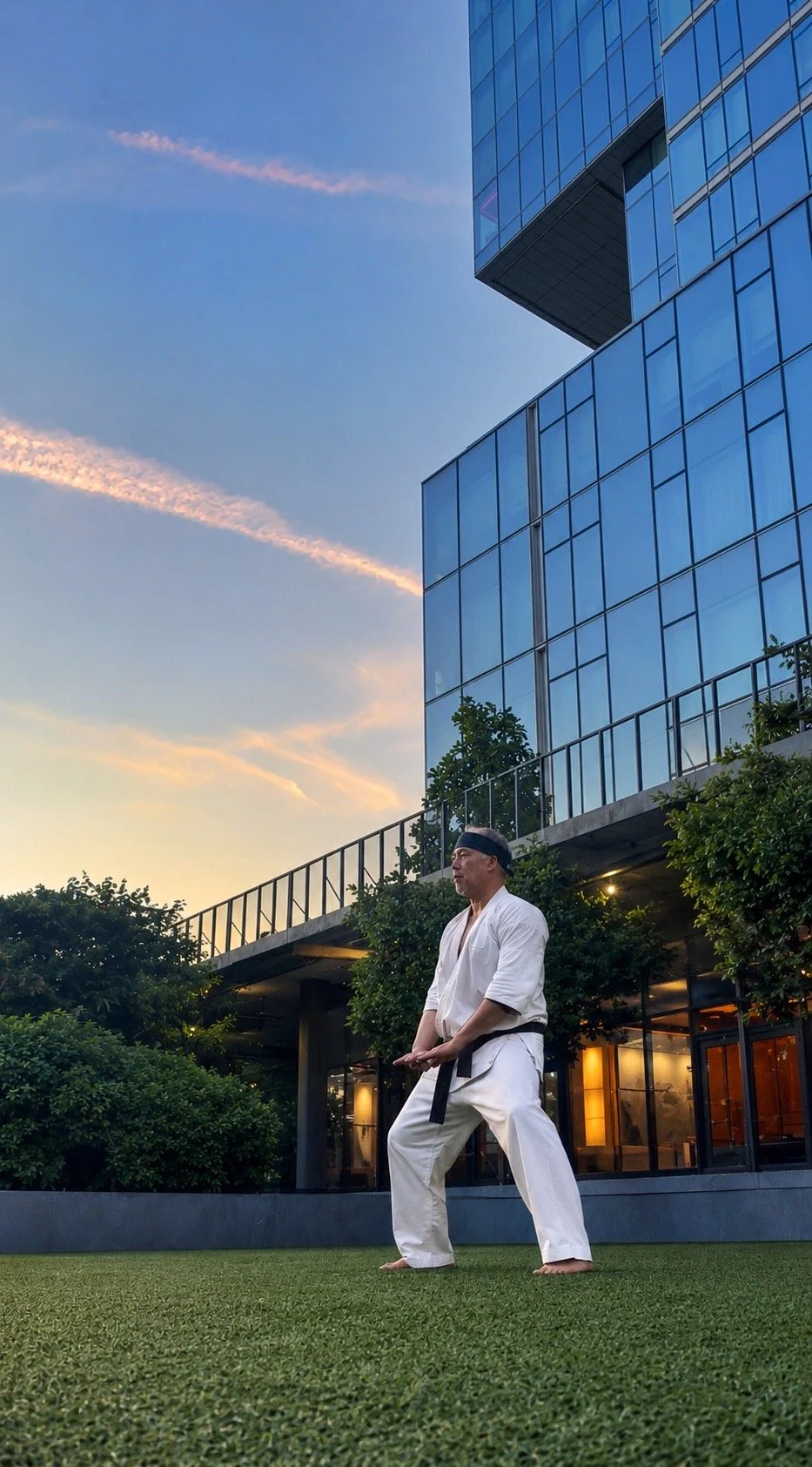
I took these photographs at Waterline Square on Manhattan’s West Side, a place where I sometimes train karate with my dojo. I know this landscape through movement: arriving, walking through it, training, looking up.
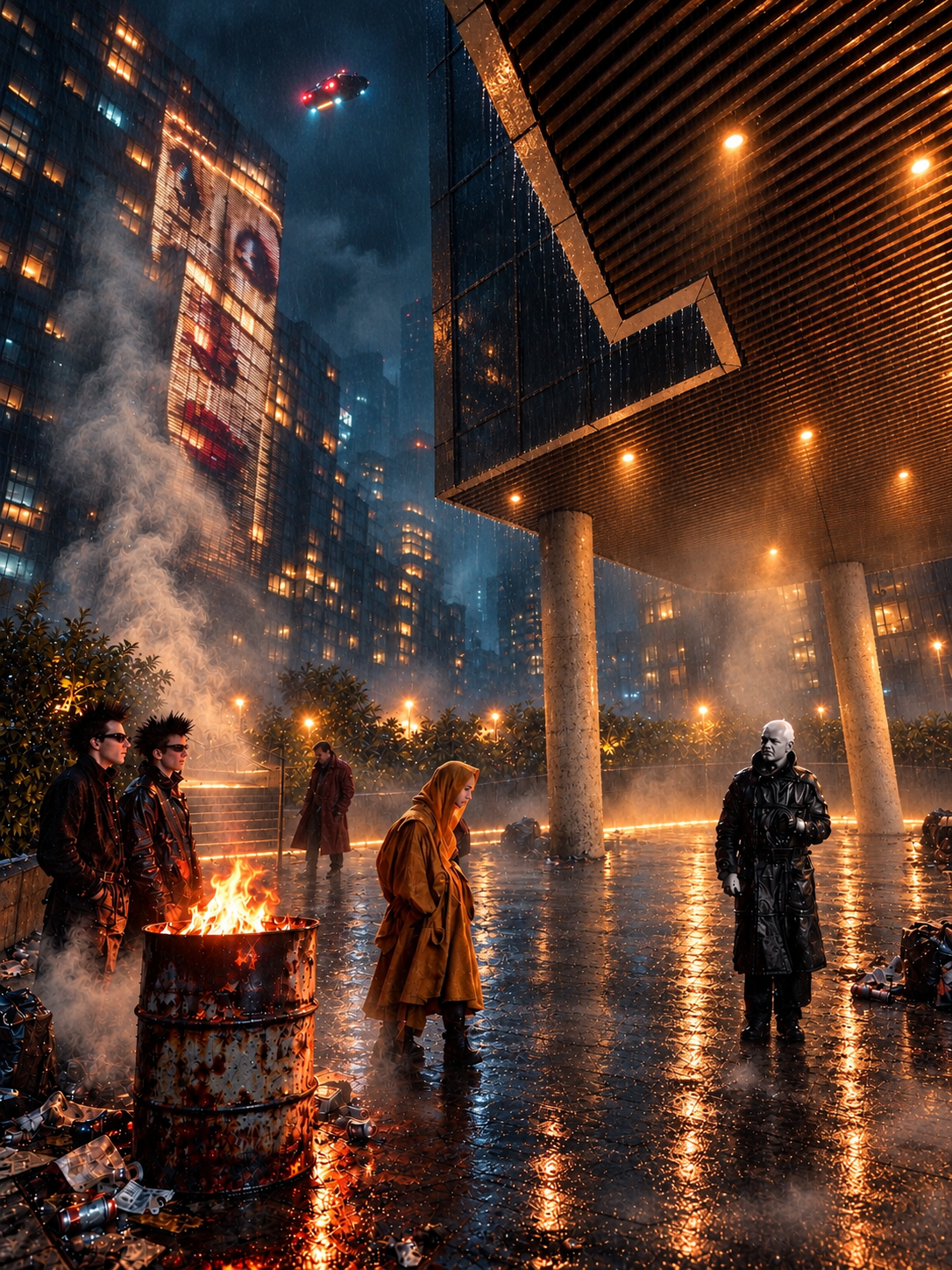
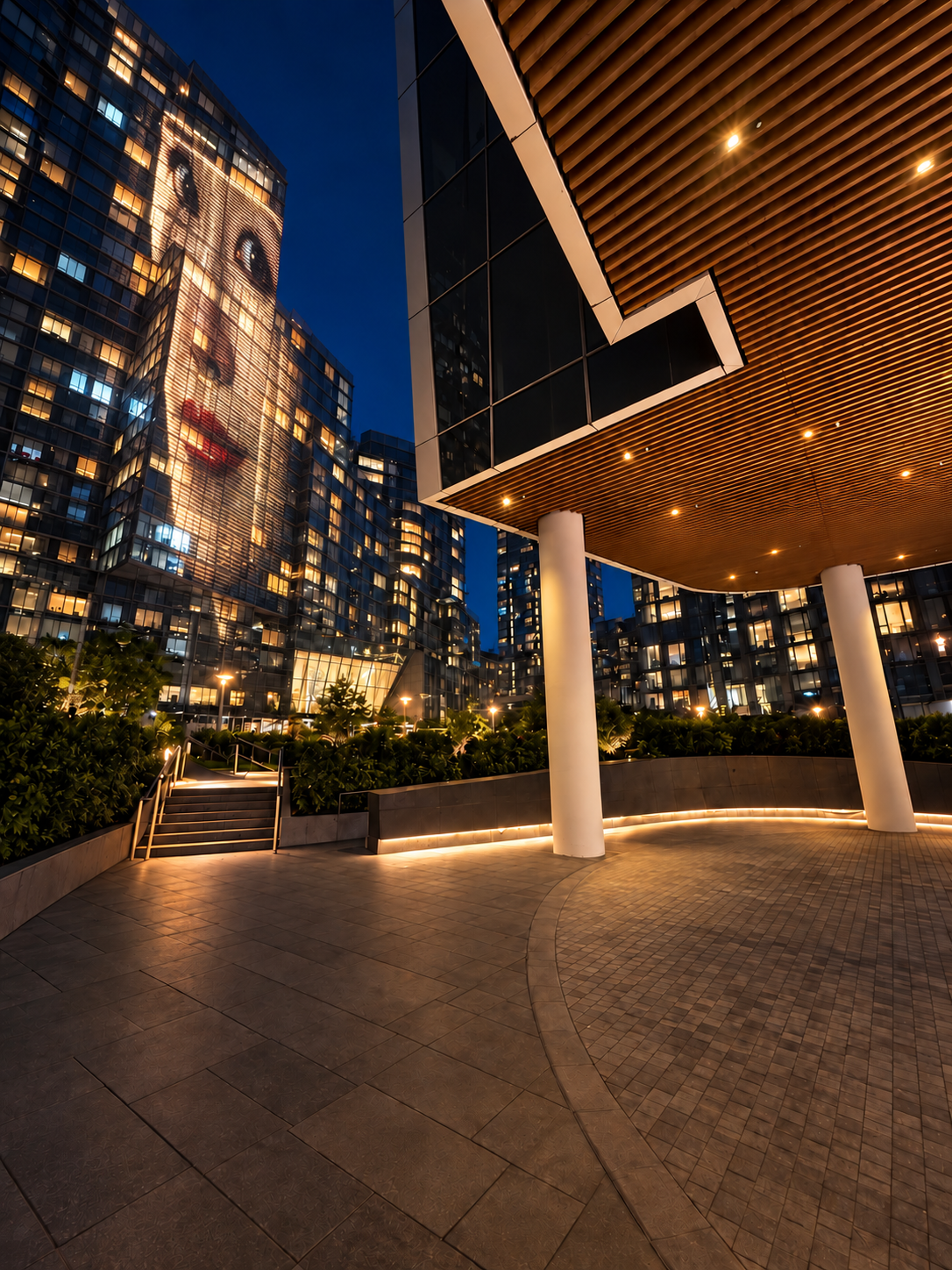
One evening, standing beneath the overhang of One Waterline Square, between its round columns, I looked out at the surrounding buildings and immediately thought of Blade Runner.
Everything was polished, landscaped, expensive, meticulously composed. Yet the repetitive glass, immense surfaces, and imposing geometry already carried the feeling of that cinematic world.
I was looking at contemporary luxury architecture, but I could see the dystopian city inside it.
ARCHITECTURE FOR WHOM?
To me, much of the current trend in architecture has no soul. It offers technical sophistication without emotional generosity. Buildings become sculptural objects, recognizable silhouettes, statements of wealth and engineering. But what do they give back to the human being standing beneath them?
At Waterline Square, I experience a kind of plastic perfection—not literally plastic, but an environment so controlled and polished that it feels detached from the irregularity of life. Architecture for the sake of architecture. An accumulation of impressive gestures that does not necessarily add up to meaning.
Architecture is more than what we see. It is what we feel in its presence.
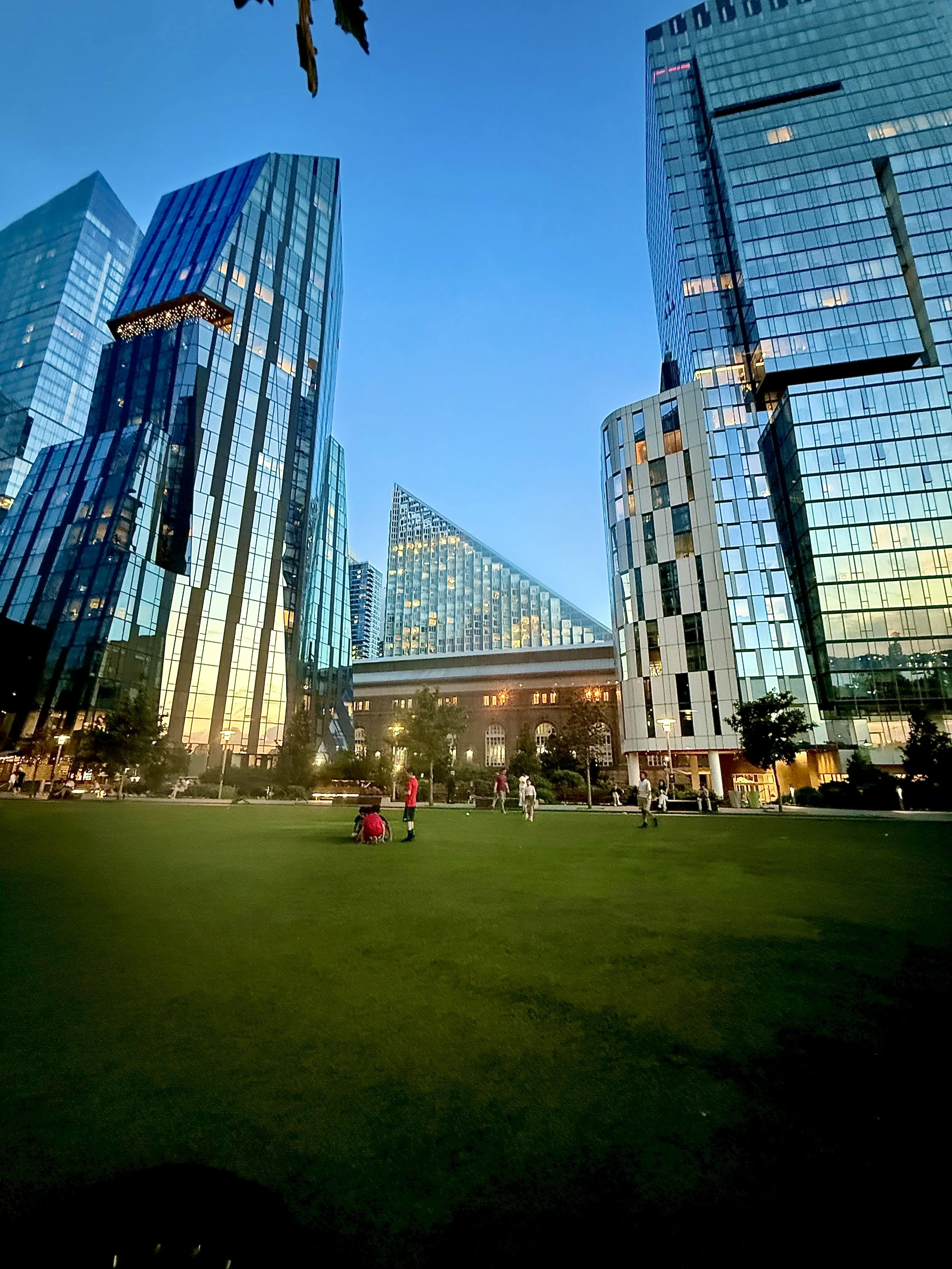
Located between West 59th and West 61st Streets, Waterline Square brings together three prominent architectural practices: Richard Meier & Partners Architects designed One Waterline Square; Kohn Pedersen Fox Associates designed Two Waterline Square; and Rafael Viñoly Architects designed Three Waterline Square. Hill West served as executive architect.
One Waterline Square is the building on the right in my wider photograph—the same building beneath which I stood to photograph the courtyard looking outward. Its park-facing façade was conceived as a layered composition inspired by leaves.
That intention makes my response particularly interesting. Where the design invokes nature, I feel distance.
MODERNIST IN LANGUAGE, BRUTALIST IN FEELING
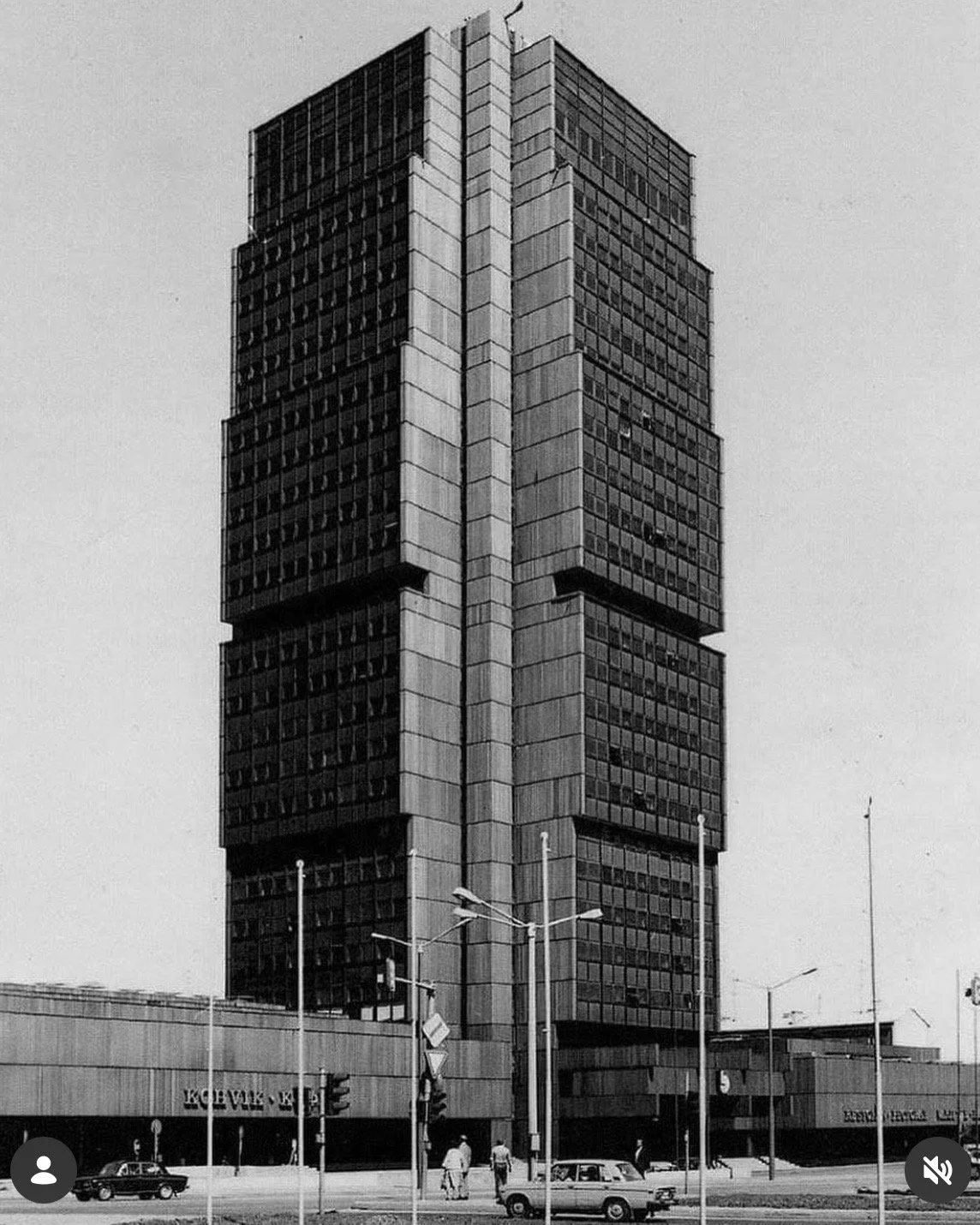
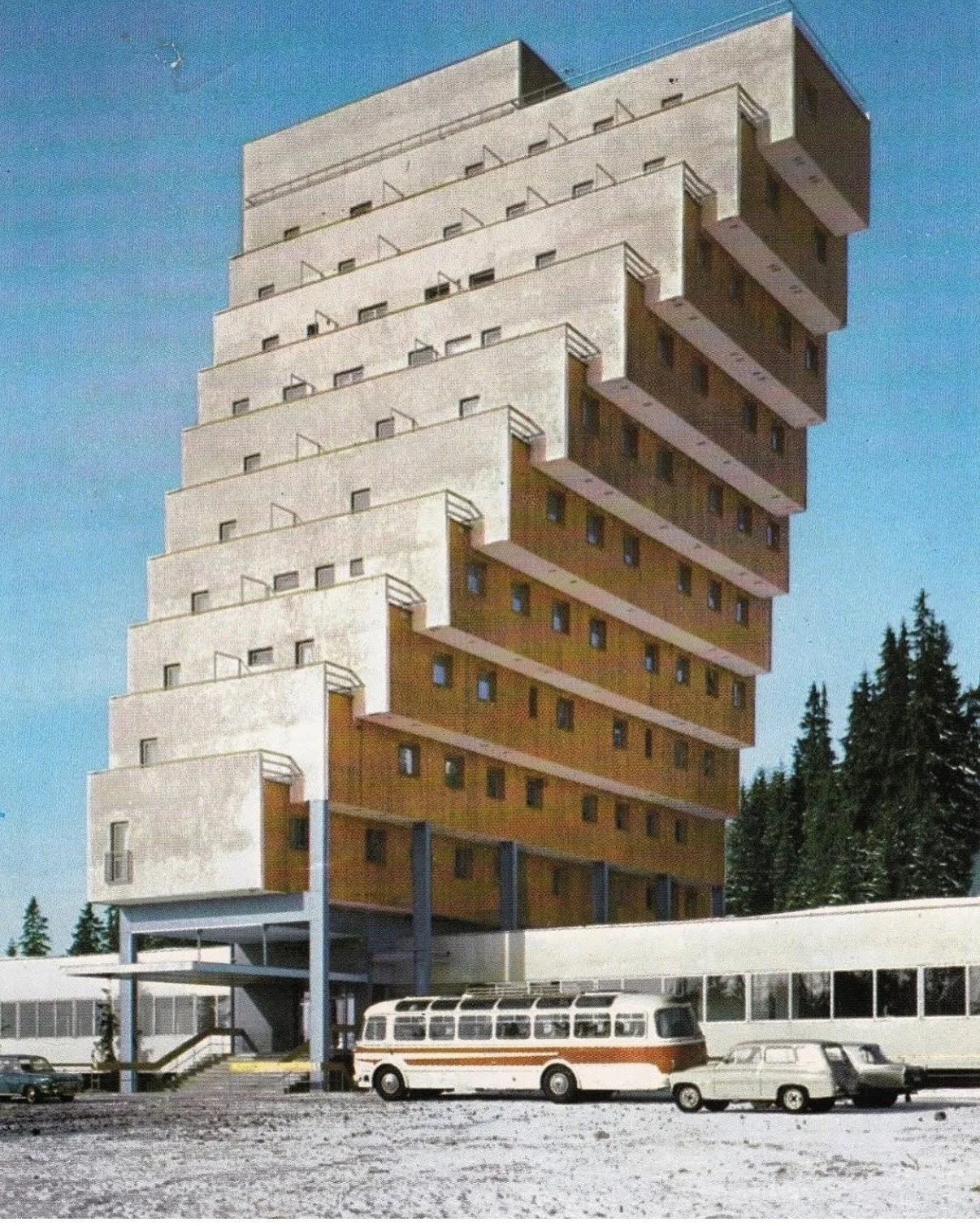
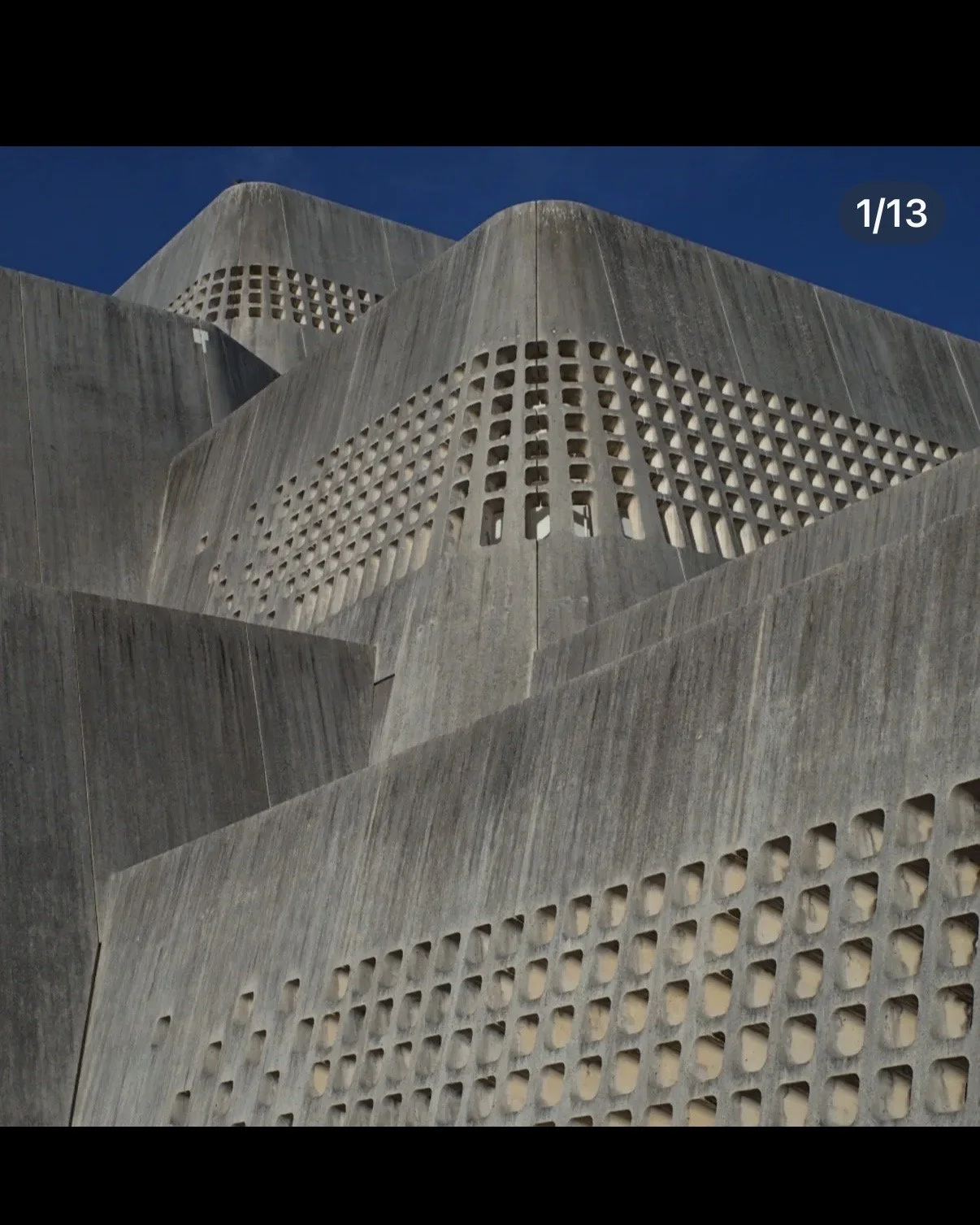
These are contemporary glass towers, but to me, they have a Brutalist presence.
Brutalism emerged in the 1950s and became prominent through the 1960s and 1970s. Its expressive forms emphasized materials, structure, and construction, often through exposed concrete.
What I recognize at Waterline Square is a related feeling of mass and monumentality: projecting volumes, severe geometries, repetition, and the sensation of being small beneath something indifferent.
A building does not need a raw-concrete façade to produce that feeling. Glass can be transparent as a material and still feel emotionally impenetrable.
Nor does concrete automatically lack soul. Scale, proportion, light, craftsmanship, and the relationship between a building and the life around it matter more to me than a stylistic label.
It is the experience I am describing: architecture that commands attention without offering a sense of connection.
WHEN DOES “LESS” BECOME TOO LITTLE?
The Seagram Building, completed in 1958 and designed by Ludwig Mies van der Rohe with Philip Johnson, offers an important historical reference. Its disciplined composition helped define an influential language of corporate modernism.
Restraint can be profoundly moving. A quiet room can hold extraordinary presence. But when the modernist ideal associated with “less is more” becomes a repeatable commercial formula, I begin to ask: less of what?
Less ornament may clarify a building. Less attention to human experience impoverishes it.
When restraint becomes endless repetition—glass, grid, polished surface, another dramatic cantilever—what once felt purposeful can begin to feel like a product.
The issue is not simplicity. It is what simplicity serves.
THE FUTURE WAS ALREADY TAKING SHAPE
Philip K. Dick’s 1968 novel, Do Androids Dream of Electric Sheep?, provided the literary foundation for Blade Runner, released in 1982 and directed by Ridley Scott.
Its cinematic world emerged through a remarkable collaboration that included screenwriters Hampton Fancher and David Peoples, production designer Lawrence G. Paull, visual futurist Syd Mead, and cinematographer Jordan Cronenweth.
Although the film takes place in Los Angeles in November 2019, Scott drew on real urban conditions in New York and Chicago when imagining its future. He explicitly referenced their density, oversaturation, and the difficulty of maintaining their buildings. Production executive Katy Haber also recalled scouting both cities with him.
His dystopia did not emerge from nowhere. It extrapolated from the world already taking shape around us.
That is what I recognized standing beneath One Waterline Square: a familiar architectural language carried forward into an atmosphere I knew from cinema. The connection was immediate and personal. I looked up, and I saw Blade Runner.
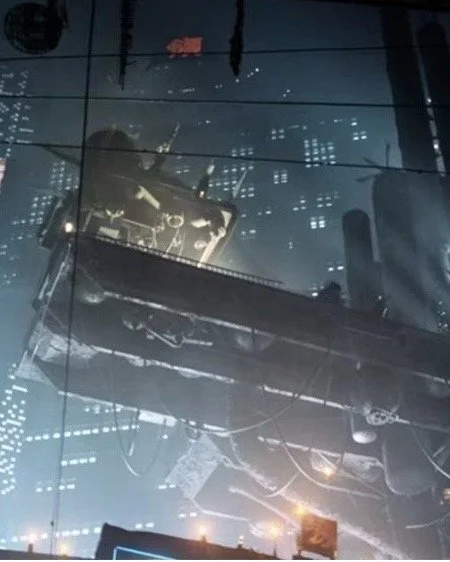
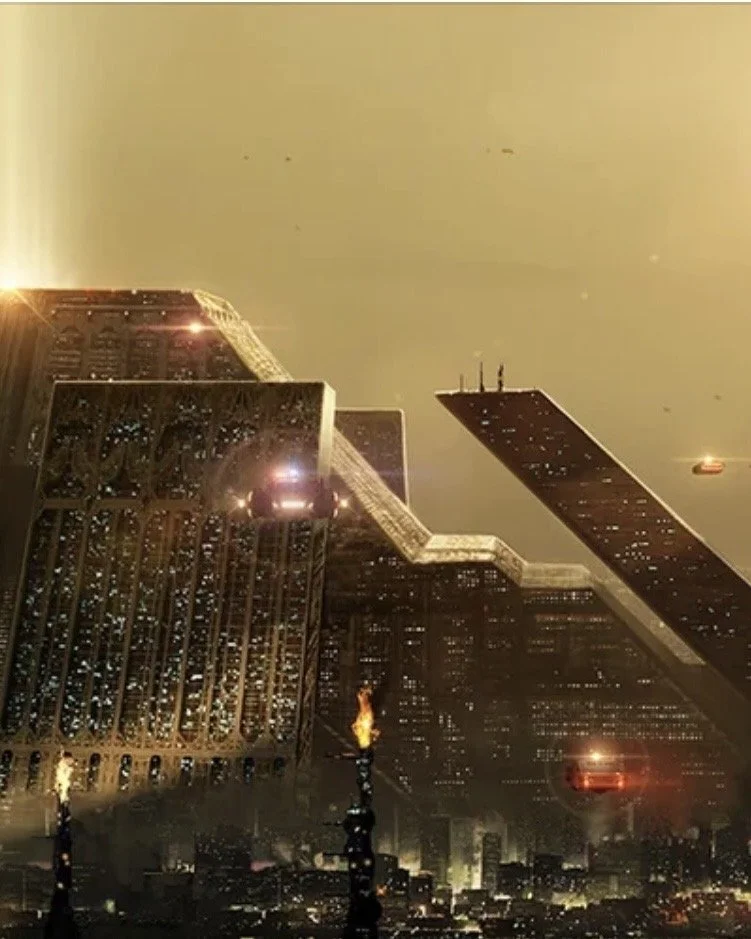
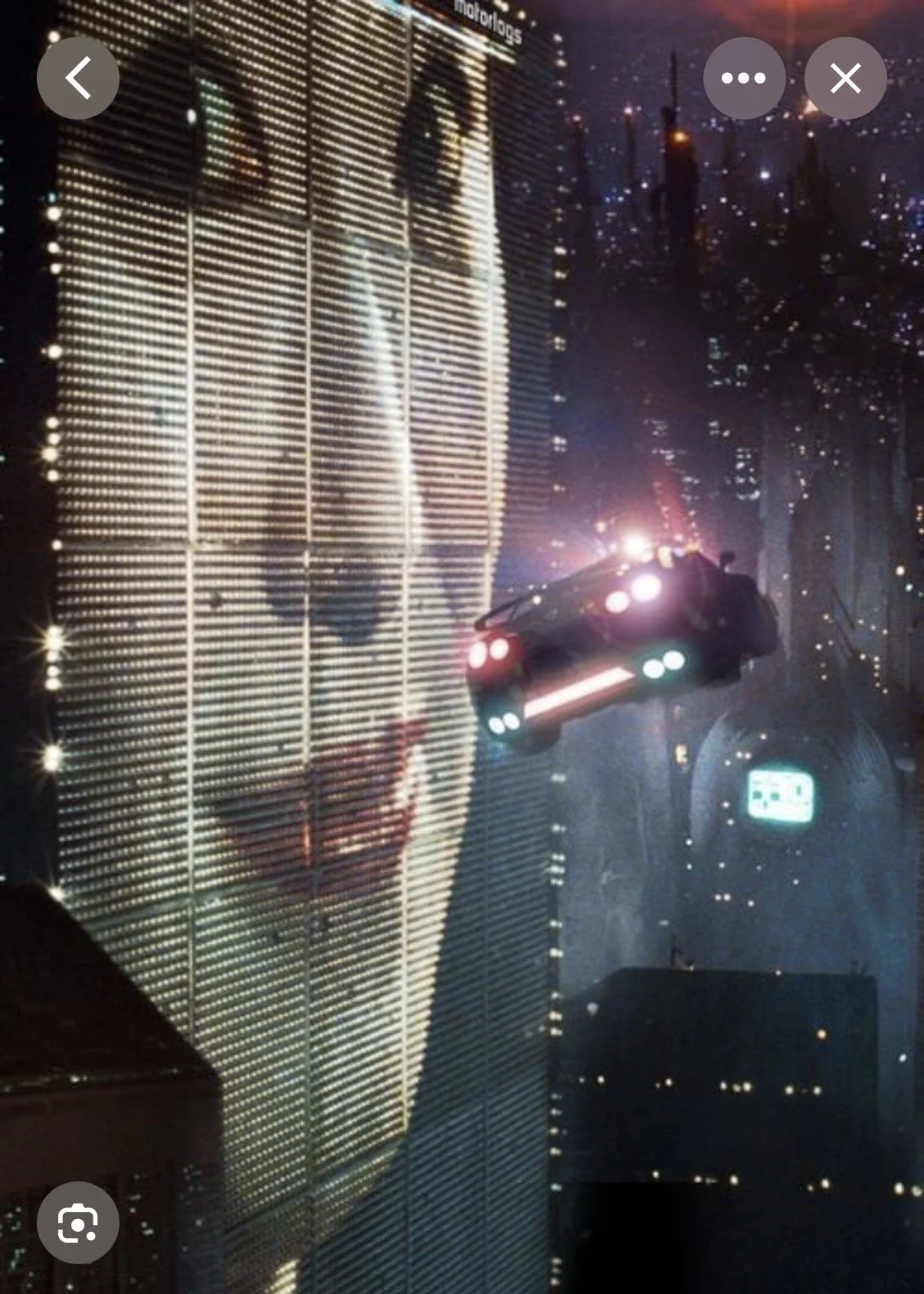
In the film, architectural power becomes visible through pyramidal masses, enormous façades, illuminated advertisements, and people living far below the scale of the structures surrounding them.
Yet its humanity persists in the street—in encounters, gestures, vulnerability, and the struggle to remain human within an overwhelming environment. That contrast gives the city its emotional force.
The architecture does not have to erase people physically to make them feel incidental.
2019: A STRIKING COINCIDENCE
One Waterline Square was completed in 2019—the very year in which the original Blade Runner takes place.
What a coincidence. Or perhaps not merely a coincidence, but something prophetic, as science fiction so often seems to be: the ability to recognize patterns in the present and follow them toward an unsettling future.
For me, this is where architecture meets sociology and psychology. Buildings express what a society values. Their scale, surfaces, thresholds, and relationship to public space communicate ideas about power, belonging, privacy, and visibility.
Looking at these towers, I felt the distance between a promise of luxury and my own desire for human connection.
CHANGING THE ATMOSPHERE
My photographs became a way to explore that recognition.
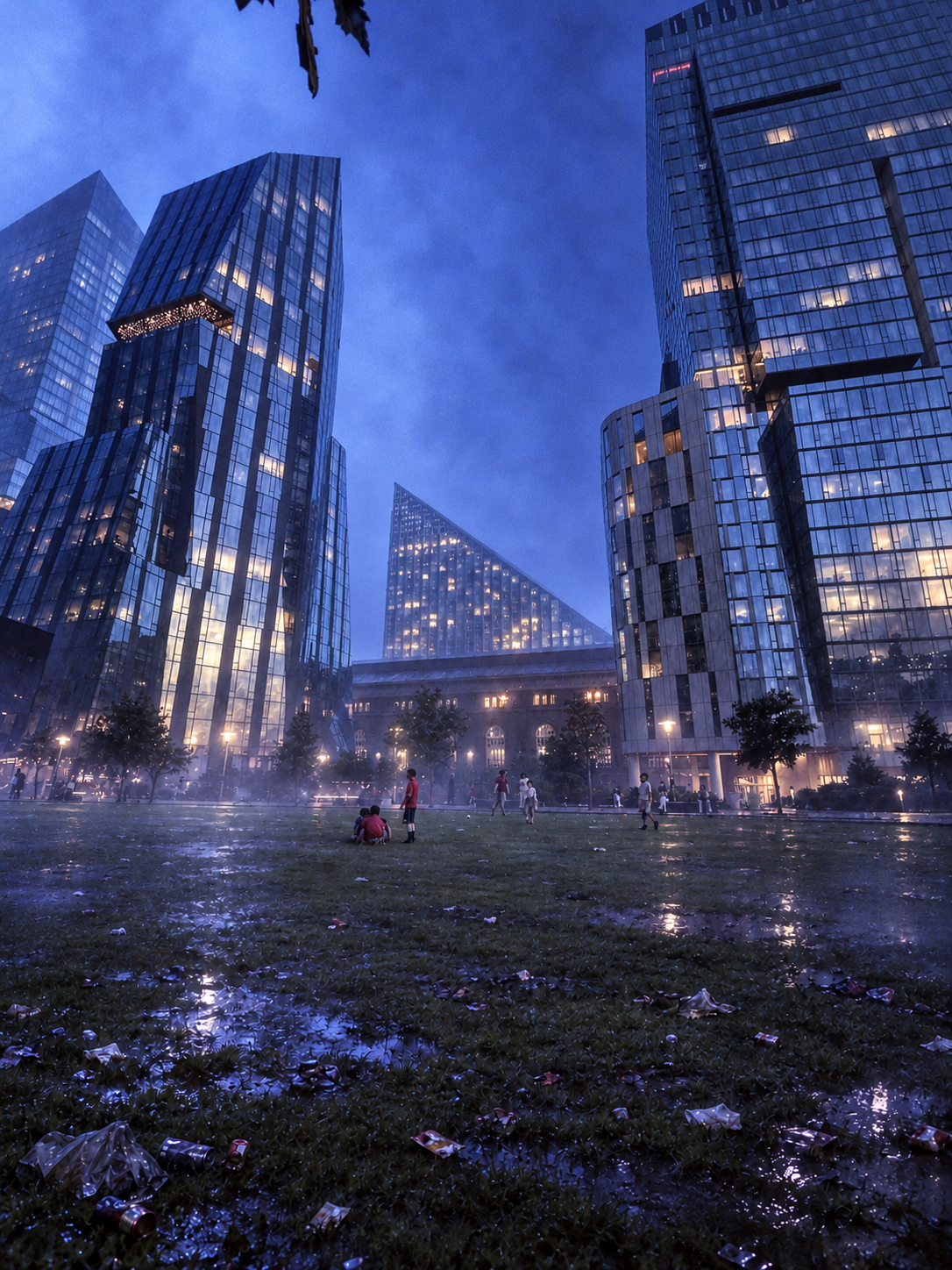
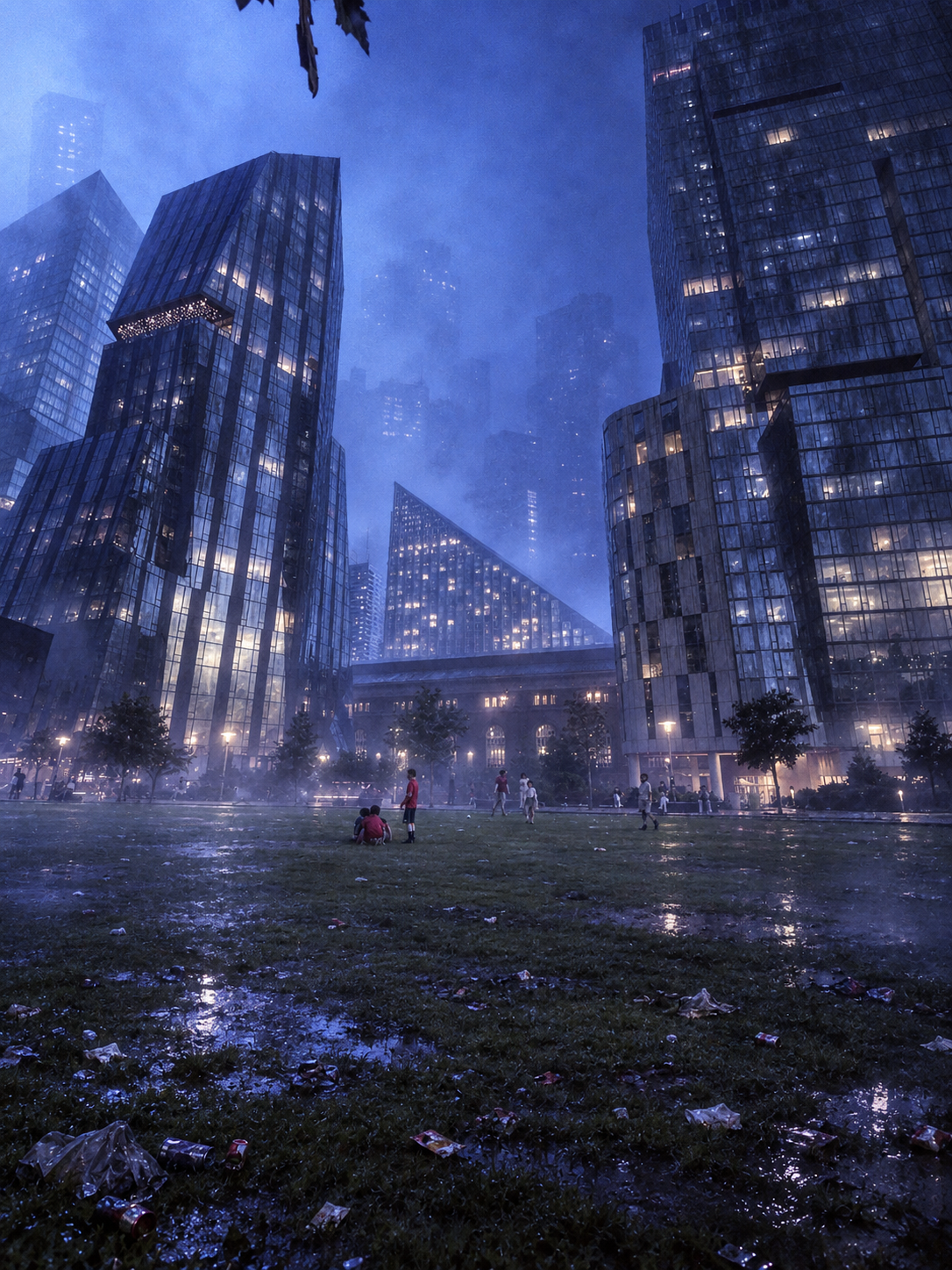
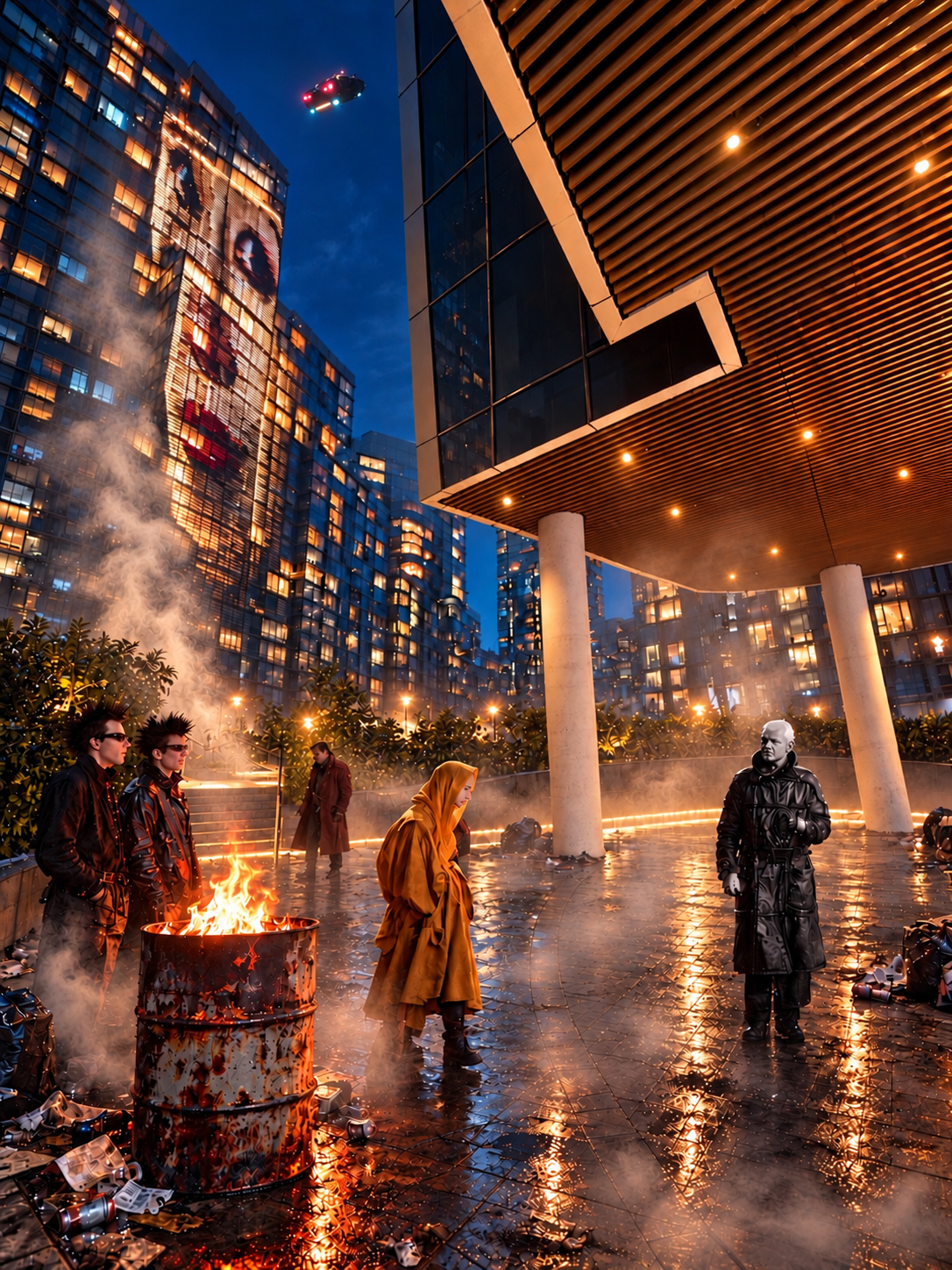
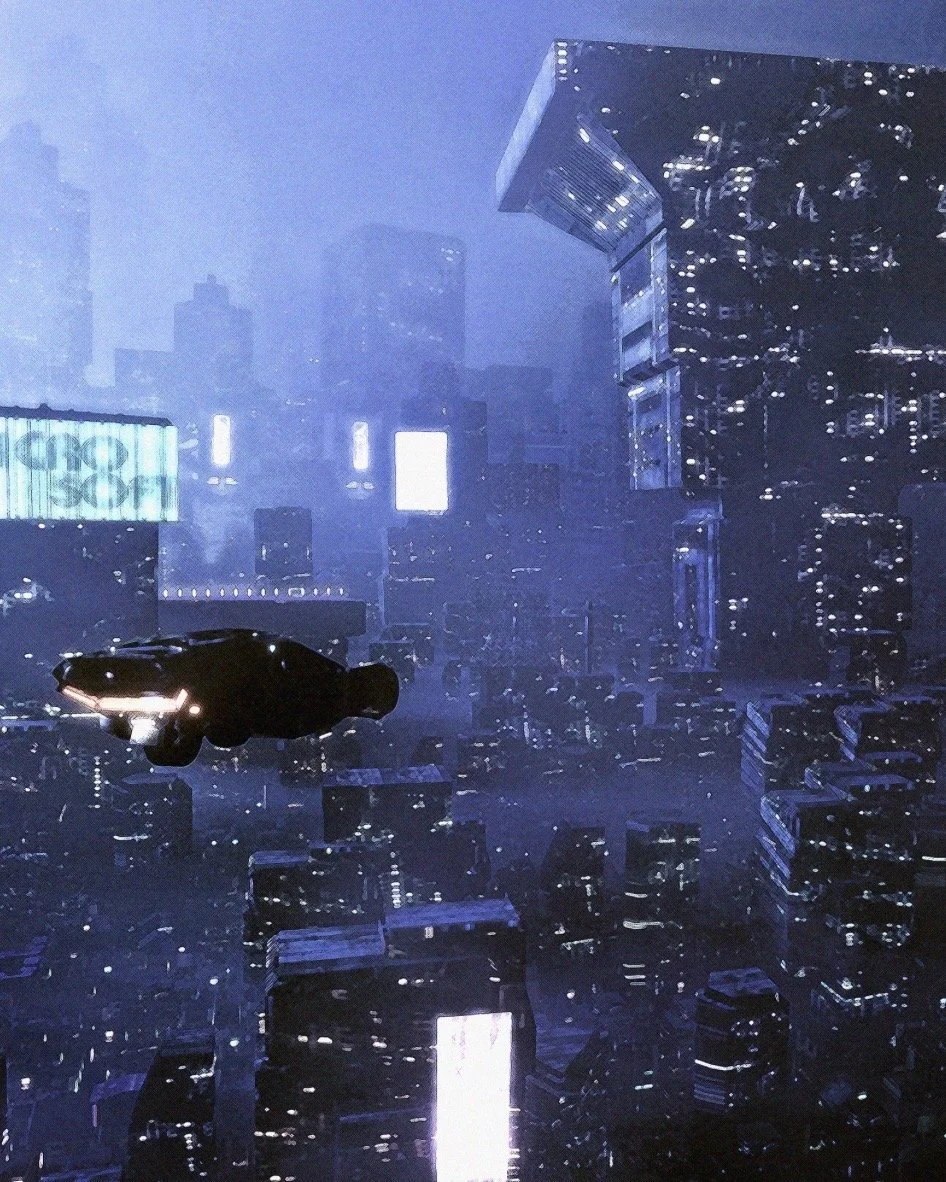
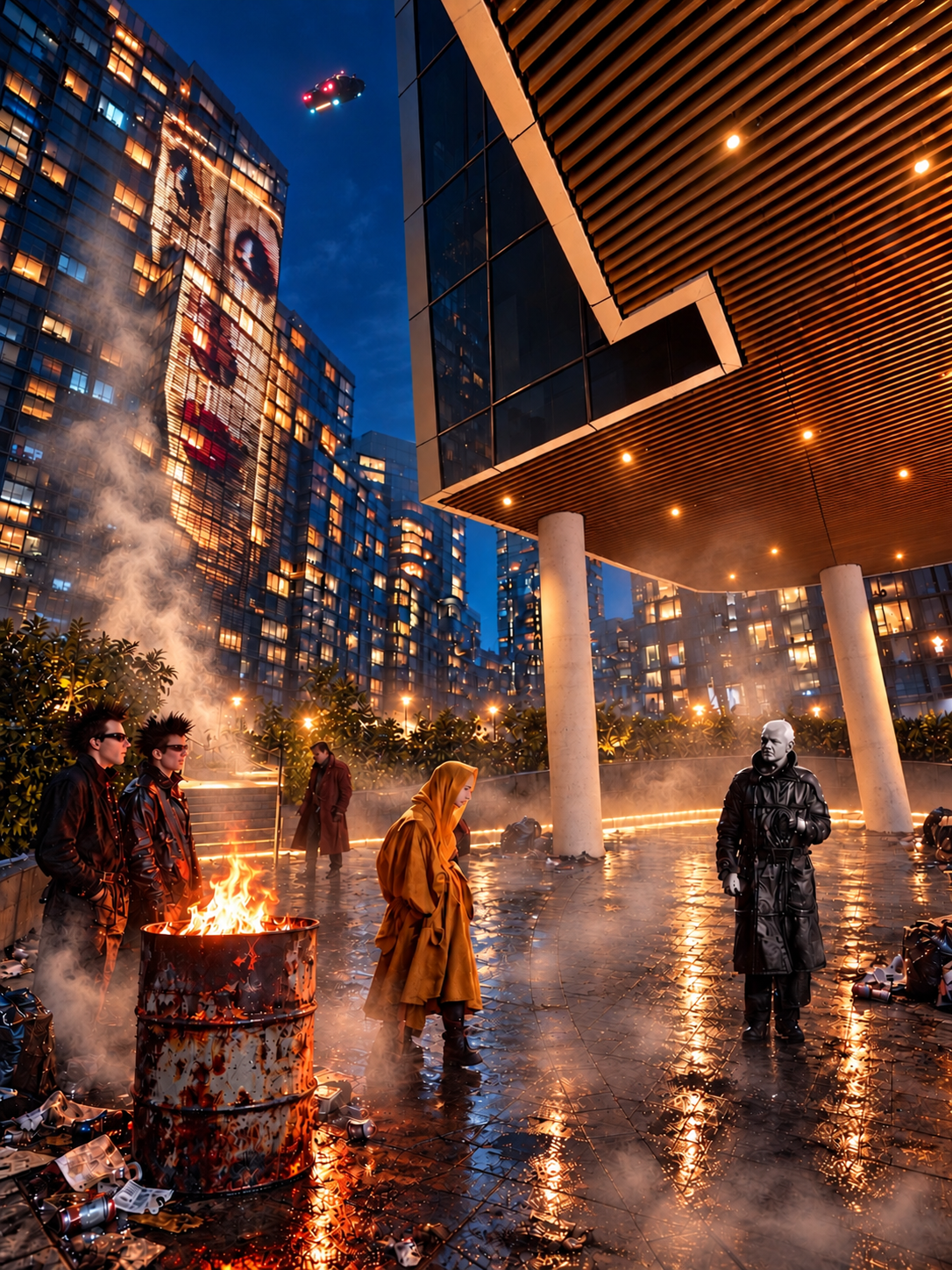
I wanted to retain the architecture while changing the conditions through which we encounter it: smoke, polluted light, rain, weathering, discarded objects, figures, and the enormous projected imagery of Blade Runner.
The resulting images are speculative visual studies developed from my original photographs.
What fascinated me was how readily the existing architecture accommodated the transformation.
In the courtyard, the overhang, columns, glass walls, and compressed view upward already provided a powerful composition. Across the lawn, children playing soccer offered something equally important: ordinary life continuing beneath extraordinary scale.
I wanted to keep them there. Their presence gives the images emotional depth. Amid the altered atmosphere, life continues.
My creative practice includes MidJourney, an advanced digital visualization tool, alongside Photoshop, Illustrator, and other digital tools. These sit within a larger practice grounded in photography, observation, production design, interiors, and architecture.
The tools help develop an image. The inquiry begins with looking.
WHAT LIVING DESIGN ASKS
My background in production design taught me that a space tells a story before anyone speaks. Light, texture, proportion, and distance establish an emotional world.
Architecture does this too. Unlike a film set, however, it becomes the setting for someone’s daily life.
For me, Living Design begins with that responsibility.
A building’s soul is not an ornament added after the structure is complete. Nor is it guaranteed by age, expense, prestige, or a celebrated architect’s name. It emerges through the relationship between a place and the lives it holds: the invitation to gather, the pleasure of touching a material, the way light enters, the possibility of belonging.
There is life at Waterline Square. Children play. Neighbors meet. We train karate. That life is what draws me back.
But I still find myself asking whether the architecture deepens those experiences, or whether people supply the warmth that the buildings themselves withhold.
I do not want architecture merely to impress me.
I want it to recognize that I am here.
Perhaps the soul of architecture begins there—not in its ability to dominate the skyline, but in its willingness to make room for us.
THE PHOTOGRAPHS
Below, you will see the before photographs—my original views of Waterline Square—and the after photographs, transformed through a Blade Runner-inspired atmosphere.
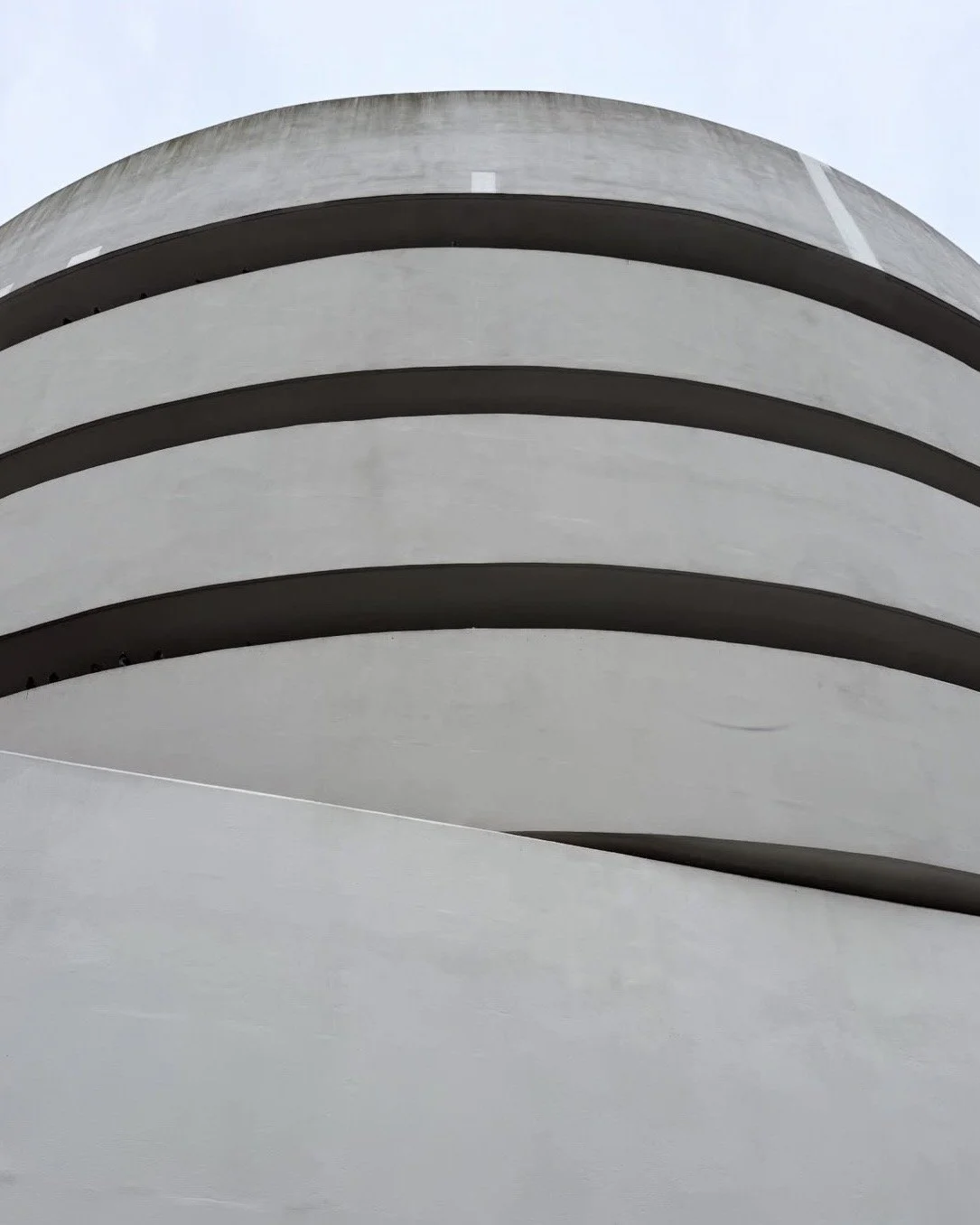
I have also included film stills and examples of postwar modernist and Brutalist architecture, particularly from the 1950s through the 1970s, to show the visual relationships that caught my attention: mass, repetition, geometry, scale, and atmosphere.
The comparison invites you to look, feel, and consider the question for yourself:
Is there a soul in architecture?
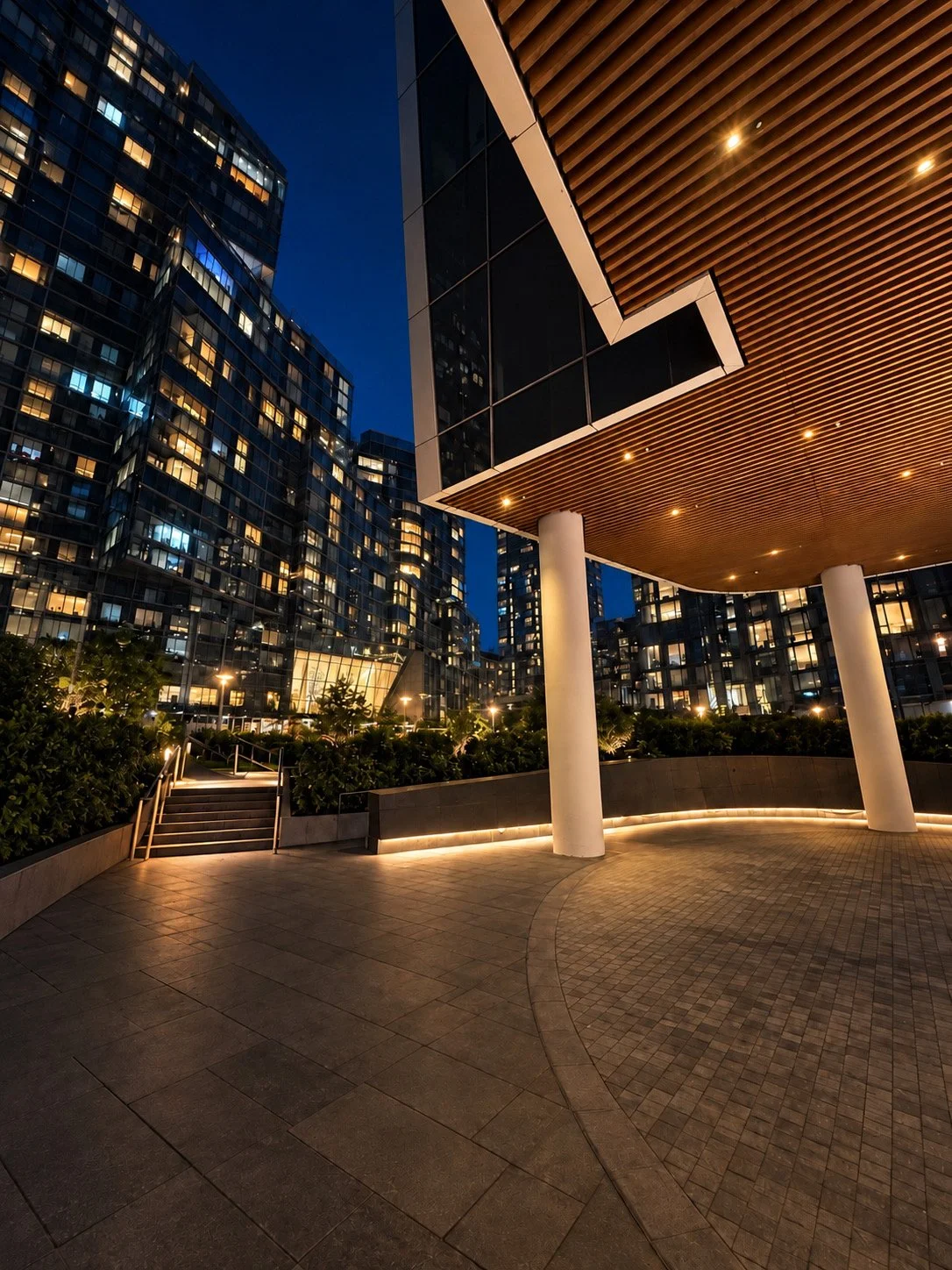
One Waterline Square
10 Riverside Boulevard
New York, NY
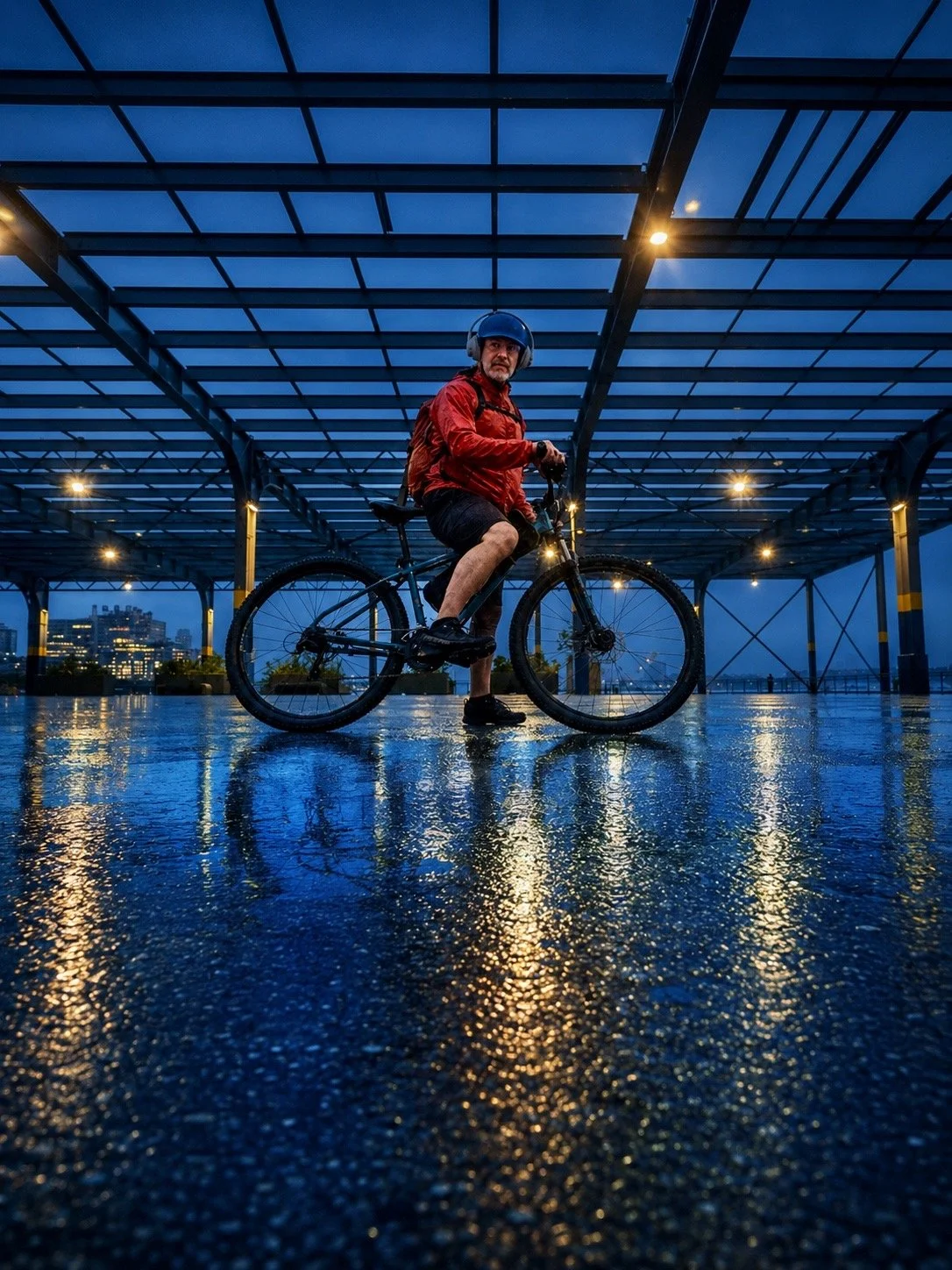
Beneath One Waterline Square
Looking north–northeast from beneath One Waterline Square, Manhattan. Photograph by Daniele Perna.
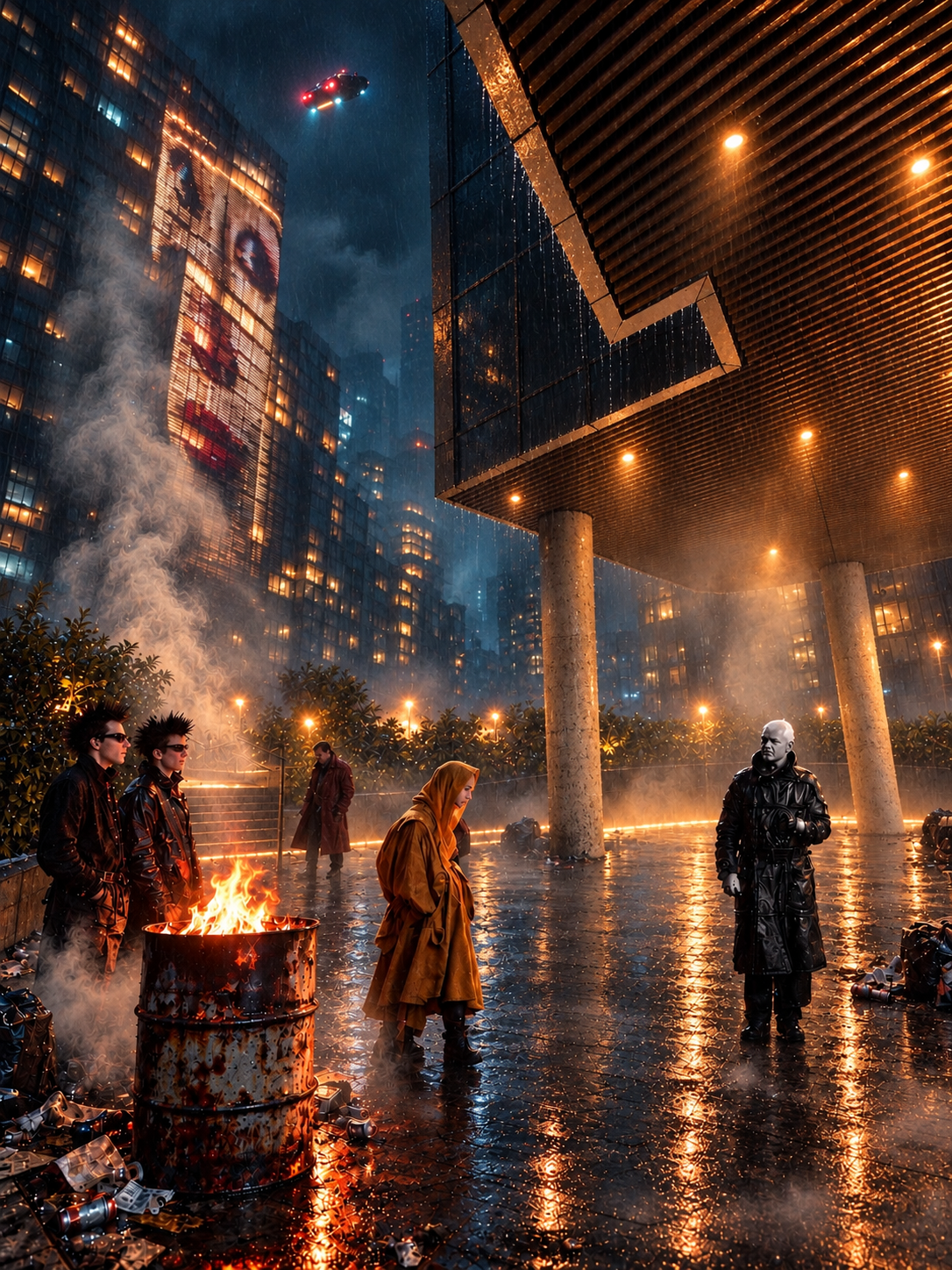
The Future I Saw
The same view, reimagined through the atmosphere of Blade Runner. A photographic transformation by Daniele Perna.