



When my daughter Isabella was two years old, she began a simple ballet class; by the age of five, she was studying at one of New York’s renowned dance schools. I loved the purity of movement, but I was disheartened by the culture that surrounded it—the competitiveness, the hovering parents, and the premature loss of innocence in something that should have been joyful. For a five-year-old, it felt like a discipline stripped of compassion. My ex-wife and I decided instead to introduce her to karate.
Isabella began training at KenWaKan Karate at the age of five and continued until she left for college at seventeen. Karate became her foundation of confidence, humility, and strength—a philosophy as much as a physical practice.
My own path was rekindled years later at a tournament in Canada where Isabella was performing—and winning, taking home trophies with grace and composure. The dojo’s owner and head instructor, recognizing my interest, generously offered me three months of instruction free of charge to help me begin. I accepted, and from that point forward, I was entirely committed.
As my training deepened, so too did my relationship with the dojo. When the opportunity arose to contribute to its design, I accepted not as a professional commission, but as an act of gratitude—to give something back to the place that had given so much to my daughter and me.
The existing second-floor space on West 15th Street presented significant constraints. The dojo had an exposed fire-sprinkler system that made it impossible to build conventional walls without complex permitting and costly Department of Buildings submissions. The solution I devised was both practical and elegant: a freestanding system of custom cabinetry positioned just below the sprinkler line.
These cabinets defined the men’s changing room, with open shelving for shoes beneath and dual-level coat hangers opposite for adults and children. Between the reception and the small kitchenette, I designed a custom glass viewing window—a portal through which parents and visitors could quietly observe classes in progress without disrupting them.
Because furniture is not classified as construction, the entire design remained fully code-compliant while achieving a sense of architectural permanence. It was a demonstration of how intelligence, restraint, and craft can transform necessity into design.
That second-floor fit-out served the dojo for a brief but meaningful period before the school relocated to its first-floor space. It fulfilled its purpose—offering dignity, efficiency, and coherence to a small community devoted to discipline and growth.
My enduring connection to Japan, to karate culture, and to the quiet clarity of Zen continues to inform my work. One day, before I leave this world, I intend to design a complete dojo—building and interior—as a living temple of movement, humility, and spirit.
Osu.
— Daniele Perna
DETAIL PHOTOGRAPHS
Left: Detail of half-moon cabinet handles with integrated shoe/boot racks below.
Right: Storage-wall hallway with bench seating opposite a continuous run of cabinets and open shoe racks leading toward the dojo; the indigo Noren (traditional Japanese doorway curtain) marks the men’s changing-room threshold.
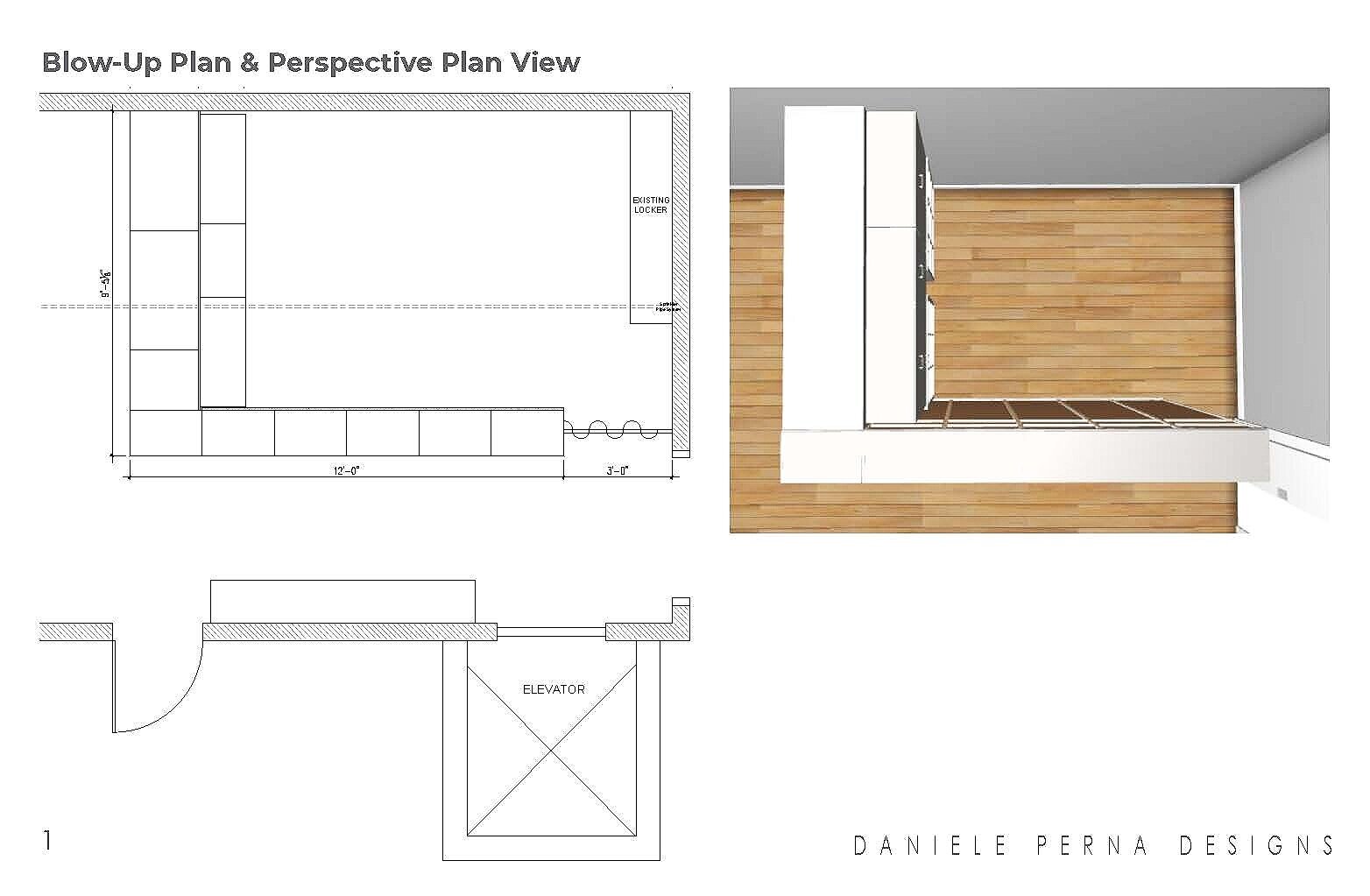
This detailed drawing highlights the cabinet system’s configuration for the men’s changing room, elevator lobby, and office corridor. The cabinetry forms a complete interior enclosure while remaining just below the sprinkler line, maintaining code compliance without DOB filings.
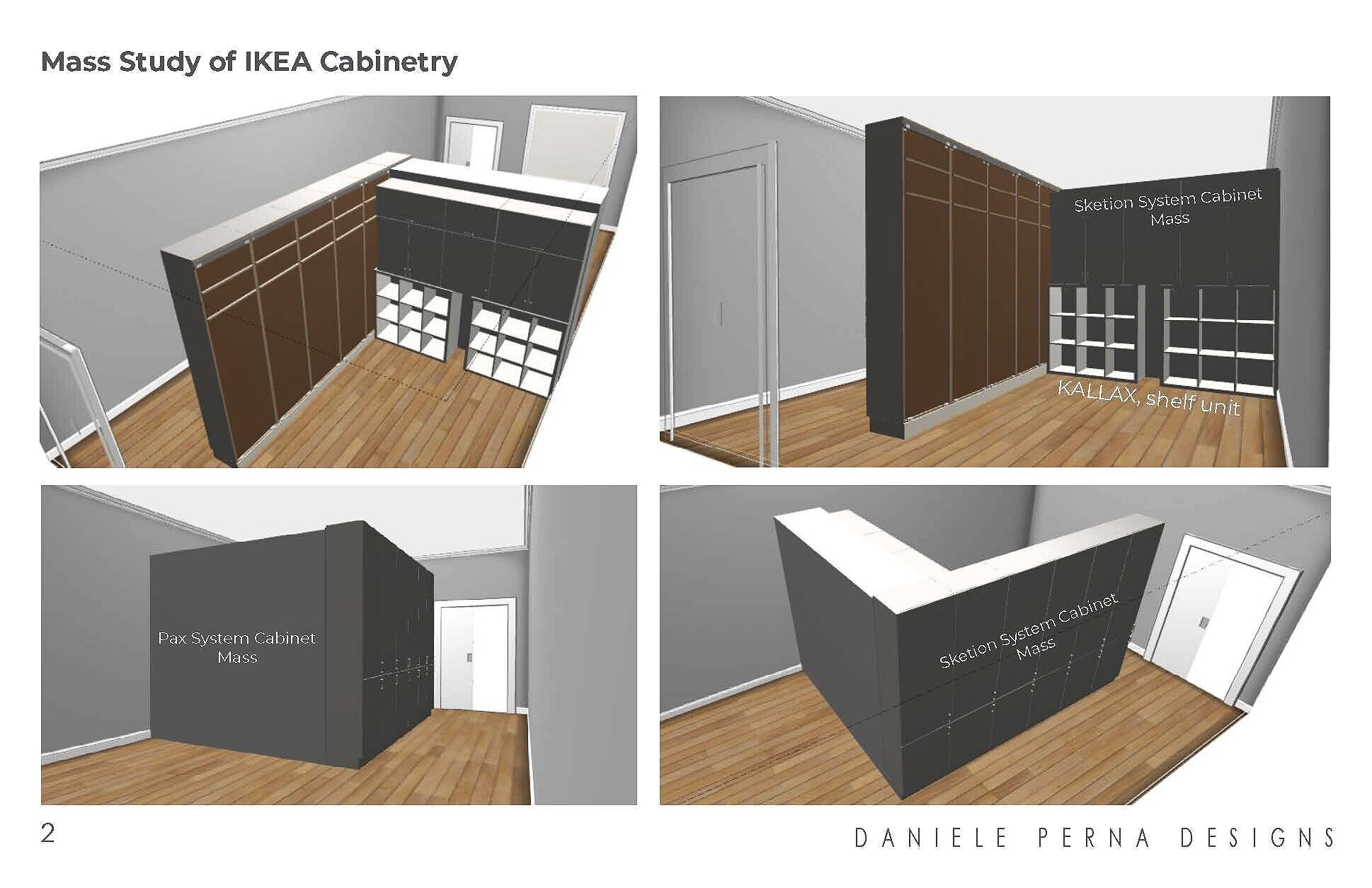
Early 3-D massing explored how modular IKEA systems—principally the PAX and KALLAX lines—could function as structural partitions. The studies set cabinet height, depth, and rhythm, proving standardized units could be recomposed into a custom architectural framework.
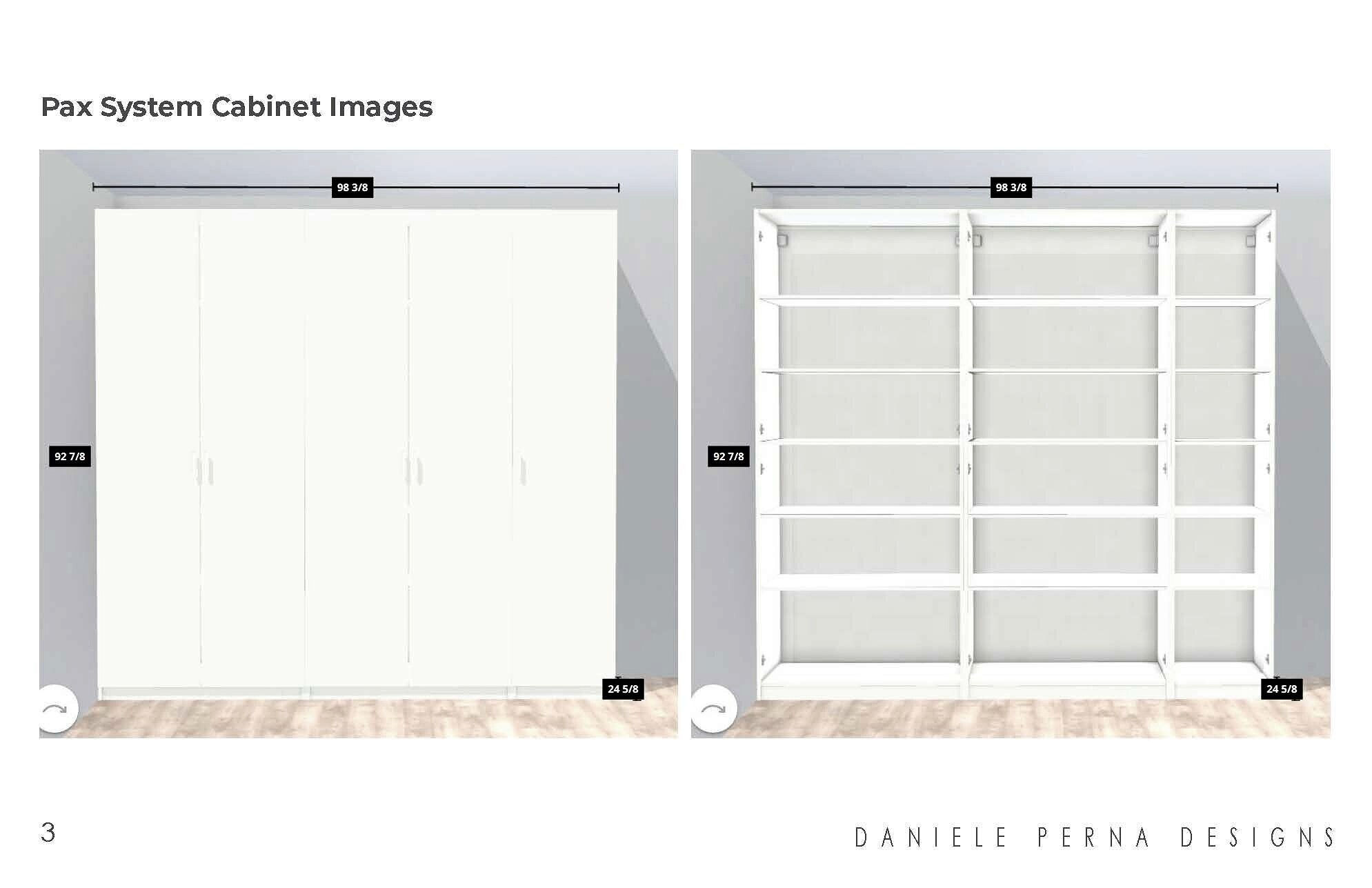
Reference images of the PAX system show the modular geometry and joinery that let the cabinets act as both furniture and wall—supporting the project’s core idea of cabinet architecture.